
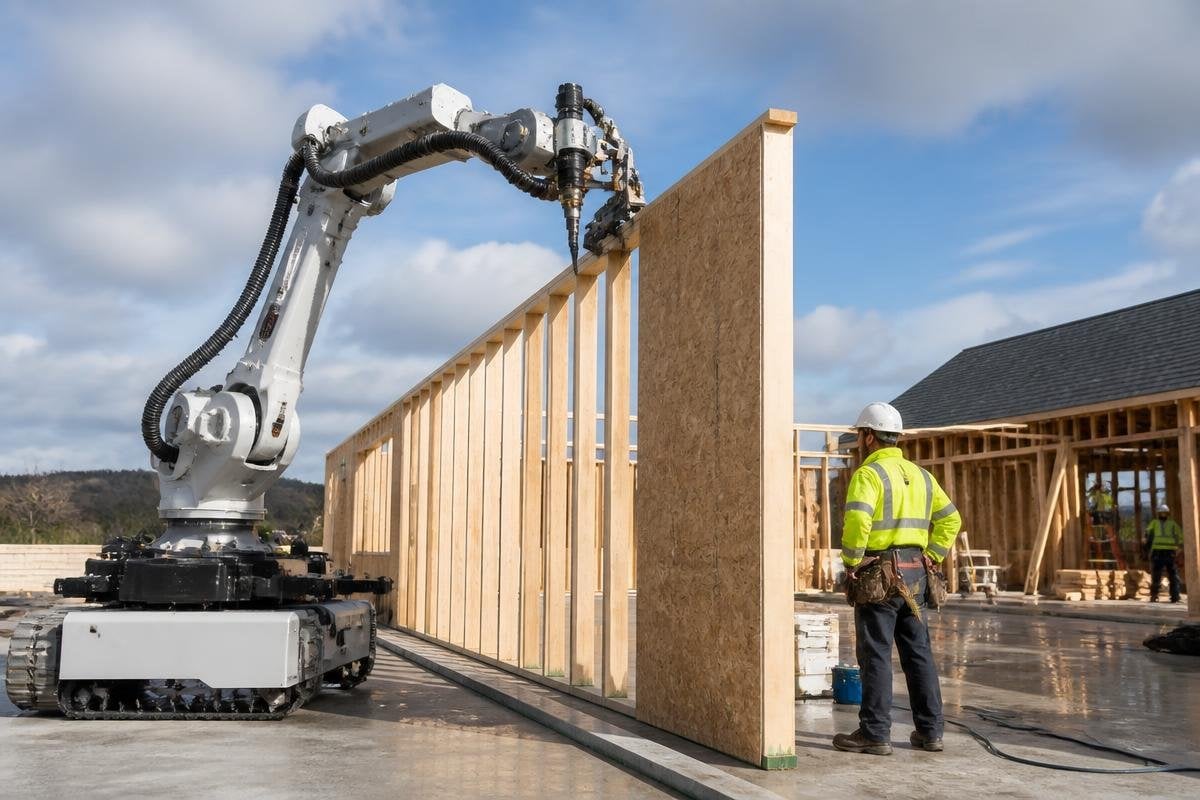
A robot may build a wall quickly and still fail to make a house cheaper. The machine handles one repeatable task, while a building site includes design changes, weather, deliveries, inspections, and work around other trades.
This matters to anyone judging a construction robot by a short video or a headline. The useful question is narrower: which job can the robot do, under which site conditions, and what does the full project cost?
- Robots fit repeatable work better than changing site tasks
- Wall speed does not equal a shorter house project
- Labour, setup, transport, and repairs belong in the price test
Where robots can help
Construction robots can work on tasks with a clear path and a fixed result. Examples include laying blocks, placing bricks, printing concrete walls, cutting materials, and checking a site with cameras or LiDAR.
That focus changes the job for the crew. A robot may handle repeated lifting or placement while people prepare materials, check the work, connect services, and deal with parts of the building that change from room to room.
A wall-building robot also needs more than an arm and a gripper. It needs a way to find its position, follow a planned path, handle the material, and stop when a person enters the work area. If the wall is out of position, another trade may have to correct it later.
The best fit is a task where the site team can keep feeding the robot the same material in the same order. That condition is easier in a factory than on an open building site, where ground levels and access can change during the day.
Faster work has limits
A robot can reduce the time spent on one task without shortening the whole build. The next trade may still need to wait for the wall to cure, for an inspection, or for a delivery to reach the site.
Setup time also counts. The crew may need to move the robot, place barriers, load materials, check its position, and clear the work area. A machine that runs quickly for part of the day may add little value if those steps take too long.
The same issue affects homes with unusual layouts. Curved walls, tight spaces, small changes in the plan, and work near existing structures can force the robot to stop while a person takes over. That handoff can erase the time saved by the machine.
Construction robots can finish a wall section while people still handle site preparation and material supply. Reports from Robot 24 can show the task the machine did and where workers took over. Those details matter before the next section counts the full cost.
The cheaper claim needs a full count
A fair price check includes the robot, its control software, transport, site setup, training, maintenance, energy, safety equipment, and the people who supervise it. It also includes the cost of a failed placement or a damaged part.
A company may cut the number of hours spent on bricklaying while adding a new technician to run the system. That can still make sense if the robot works for many hours across many projects, but the result depends on the work available and the machine’s uptime.
Without a named project, a measured build time, and a full cost sheet, a claim about cheaper houses is incomplete. A video can show that a task works. It can’t show the labour cost, repair rate, or total project time.
I’d judge a construction robot by the cost and time of the finished house, not by its fastest single task.
Questions to ask before buying the claim
Use this checklist when a vendor presents a house-building robot:
- Name the task: What exact work does the robot perform, and where does a person take over?
- Check the clock: Does the stated speed include setup, material loading, safety stops, and repairs?
- Count the crew: How many people prepare, supervise, maintain, and reset the system?
- Test the site: Can it work on the actual ground, layout, weather conditions, and access route?
- Price the result: What is the total cost per finished wall or house compared with the current method?
- Ask what failed: Which materials, layouts, or site conditions stopped the robot during the trial?
These answers also show whether the machine belongs on the site or in a factory. Factory-built wall panels may give a robot a steadier work area, while on-site systems face more changes but may reduce the need to move large parts.
What happens next
Robots will probably take on more house-building tasks where the work stays fixed and the material flow stays steady. The harder test is a complete project with a recorded start date, finish date, labour count, repair log, and final cost.
Until those figures are public, the safe claim is limited: robots can speed selected construction jobs. A cheaper house needs proof from the whole build.