
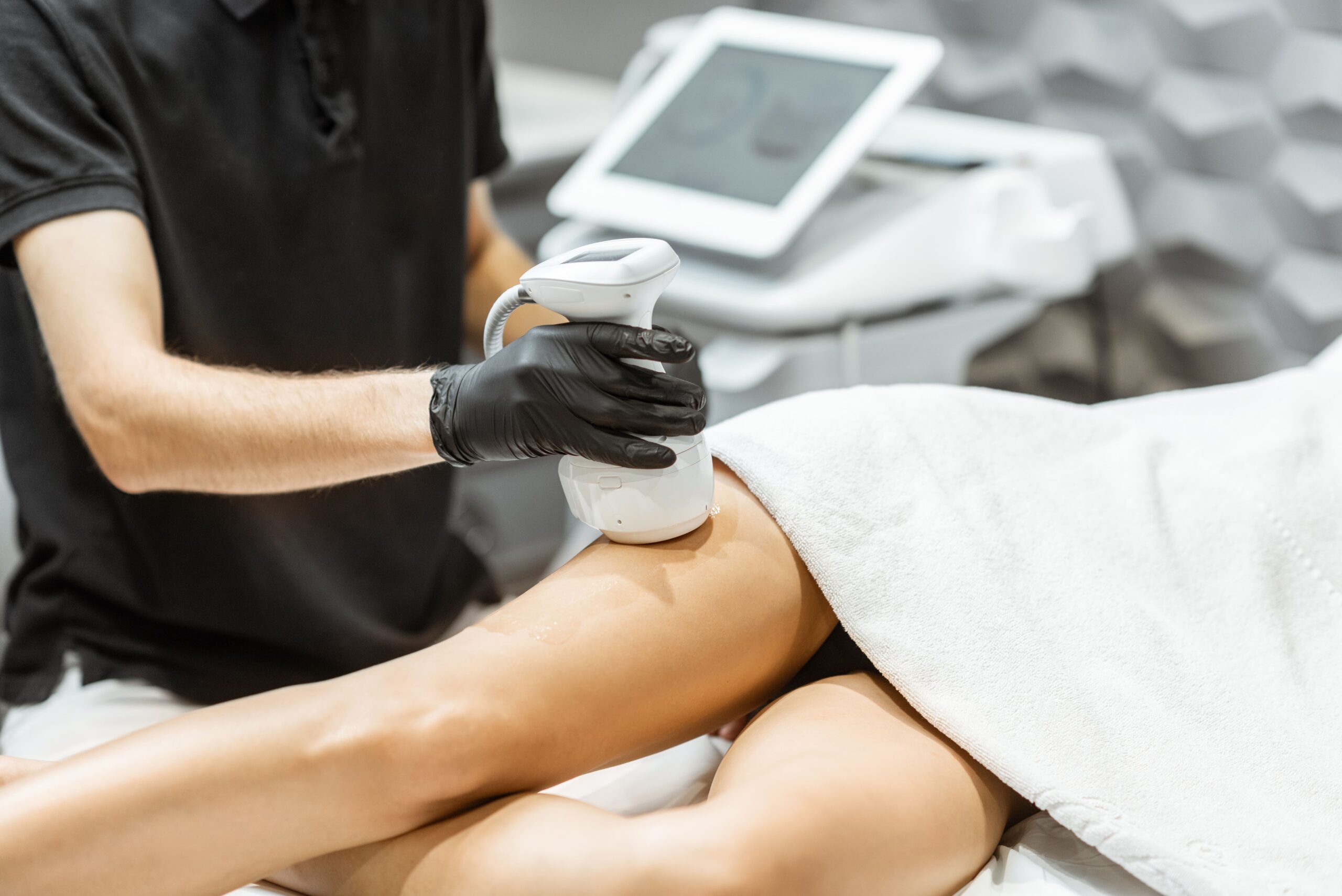
Liposuction can be used to contour several parts of the body, but treating multiple areas in one surgical plan requires more than simply choosing a list of places where fat should be removed. The surgeon must consider the patient’s overall health, body proportions, skin quality, desired outcome, treatment extent, and recovery needs. Because larger treatment areas or multiple procedures can increase complication risks, careful planning is particularly important.
Contents
ToggleWhat Does Multiple-Area Lipo Involve?
Multiple-area liposuction refers to contouring more than one region of the body, such as the abdomen and flanks, thighs and hips, or arms and back. Liposuction is intended to remove localized fat deposits and improve body contours rather than serve as a general weight-loss procedure. Common treatment areas include the abdomen, waist, back, thighs, hips, buttocks, arms, chin, and neck.
Treating several areas can sometimes create a more balanced appearance because body contours are connected. However, the appropriate combination depends on the individual rather than on a standard package of treatment areas.
Start With Your Overall Body-Contouring Goal
Before discussing individual areas, patients should explain what they ultimately want their body shape to look like. For example, someone may be primarily concerned about creating a more defined waist, while another person may want better proportion between the upper and lower body.
This conversation allows the surgeon to think about the body as a whole rather than treating every fat pocket independently. A successful plan should aim for harmonious contours instead of simply removing as much fat as possible.
Ask Whether All Areas Should Be Treated at Once
One of the most important questions is whether multiple areas can safely be addressed during the same operation. The answer depends on factors such as the amount of fat involved, the size of the treatment areas, the patient’s health, the planned anesthesia, and whether other procedures are being performed.
The risk of complications can increase when larger body surfaces are treated or when multiple procedures are combined.
For some patients, treating everything in one operation may be reasonable. For others, dividing treatment into separate stages may provide a more appropriate approach. This decision should be made individually with the surgeon.
Discuss How Much Fat Will Be Removed
Patients sometimes assume that removing more fat automatically produces better results. That is not necessarily the case. Liposuction is fundamentally a contouring procedure, and the surgeon needs to balance fat removal with body proportions, tissue characteristics, and safety.
Ask your surgeon how much fat they anticipate removing, why that amount is appropriate, and whether the planned volume affects where or how the procedure should be performed. Large-volume procedures may require additional safety considerations and monitoring.
Skin Quality Matters
Fat reduction and skin tightening are not the same thing. After fat is removed, the skin needs to adapt to the new underlying contours. Patients with good skin elasticity may experience smoother results, while thinner or less elastic skin may not contract as effectively and can leave areas looking loose.
This makes skin quality an important part of the consultation. If significant loose skin is present, the surgeon may discuss whether liposuction alone is likely to achieve the desired appearance or whether another approach should be considered.
Consider How Different Areas Connect
When several areas are treated, the transition between them becomes especially important. For example, contouring the abdomen without considering the waist or flanks could produce a different visual effect than treating those regions as part of one overall plan.
The surgeon may evaluate the relationship between the front, sides, back, and lower body to determine where contouring would have the greatest aesthetic impact. The goal should be proportion rather than isolated changes.
Be Honest About Your Medical History
A thorough consultation should include your medical conditions, allergies, medications, supplements, previous surgeries, tobacco or vaping use, and other relevant health information. This information helps the surgeon identify factors that could affect anesthesia, healing, bleeding, or other aspects of surgery.
Patients should never leave out medical information because they believe it could prevent them from qualifying for surgery. Complete information allows the surgical team to make safer decisions.
Ask About the Surgical Technique
There are different liposuction techniques, and the appropriate method depends on the patient’s anatomy, treatment goals, and the surgeon’s assessment. Patients should ask which technique is being recommended and why it is appropriate for the areas being treated.
It is also reasonable to ask about anesthesia, the surgical setting, expected procedure length, and how the surgeon handles unexpected issues. Professional guidance emphasizes discussing the procedure, risks, facility, technique, and recovery during the consultation.
Choosing the Right Surgeon
If you are searching online for lipo surgeons near me, avoid making your decision based solely on proximity, price, or promotional photographs. Look into the surgeon’s qualifications, specific training, experience with liposuction, surgical facility, and approach to patient safety. Professional organizations recommend asking about board certification, surgical training, facility accreditation, experience, potential complications, and realistic results.
A good consultation should also make you feel comfortable asking difficult questions. You should understand not only what the surgeon recommends, but also why that approach is appropriate for your body.
Understand the Recovery Before Scheduling
Recovery can be more demanding when several areas are treated. Swelling, bruising, soreness, and restricted activity are common during the early recovery period, while swelling can continue improving for weeks. Compression garments may also be recommended as part of postoperative care.
Ask how much time you should expect to take away from work, when normal activities can resume, how exercise will be reintroduced, and whether you will need help at home. Planning these details beforehand can make recovery considerably easier.
Know the Possible Risks
Liposuction is surgery, so patients should understand its potential risks rather than focusing only on the expected cosmetic benefits. Possible complications include infection, bleeding, fluid accumulation, changes in sensation, contour irregularities, asymmetry, poor wound healing, blood clots, and anesthesia-related complications.
When multiple or larger areas are treated, the surgeon should explain how the scope of the procedure affects the individual’s risk profile. Patients should also ask how complications would be handled if they occur.
Set Realistic Expectations for the Final Result
Liposuction can permanently reduce fat cells in treated areas, but it does not prevent future weight gain. Maintaining a relatively stable weight can help preserve the contouring results. Skin elasticity and individual healing also influence the final appearance.
Patients should therefore think in terms of improved contours rather than perfection. Photographs and examples can be useful during consultation, but the surgeon should explain what results are realistically achievable for your particular anatomy.
Questions to Take to Your Consultation
Before committing to multiple-area liposuction, consider asking:
- Which areas would benefit most from treatment?
- Should all of the areas be treated during one operation?
- Would staged procedures be safer or more appropriate?
- How much fat do you expect to remove?
- How will treatment affect my overall proportions?
- Is my skin elastic enough for liposuction alone?
- Which technique and anesthesia do you recommend?
- Where will the procedure be performed?
- What risks are particularly relevant to me?
- How long should I expect to recover?
- When can I return to work and exercise?
- What results are realistic for my body?
- What happens if I develop an uneven contour or other complication?
The Bottom Line
Multiple-area liposuction should be approached as a personalized body-contouring plan rather than a simple request to remove fat from several locations. The most important discussion is not only which areas can be treated, but which combination makes sense for your anatomy, health, goals, and safety.
A detailed consultation gives both patient and surgeon an opportunity to establish realistic expectations, evaluate potential risks, plan recovery, and determine whether treating multiple areas together is appropriate. The safest and most satisfying approach is one based on individualized surgical planning rather than trying to maximize the number of areas treated in a single session.