
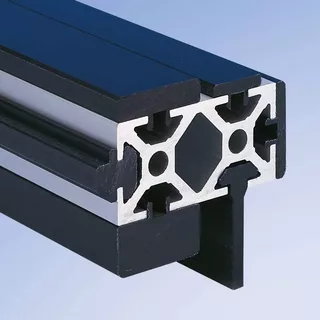
Industrial builders often search for a material that feels solid in structure but easy to handle during assembly. MiniTec Aluminum Framing meets that need by combining sturdy engineering with a lightweight profile that supports both small-scale projects and large automated systems. Understanding how this balance is achieved reveals why MiniTec extruded aluminum framing has become a trusted choice for modern modular construction.
Extruded Profiles That Retain Rigidity Without Excess Weight
MiniTec Aluminum Framing begins with extruded profiles shaped to maximize strength where it matters most. The internal web patterns distribute load evenly across the length of each piece, preventing twisting or flexing under normal use. This approach creates rigidity without unnecessary mass. Rigidity comes from geometry, not bulk. Designers use strategically placed interior walls and hollow chambers to achieve stiffness while reducing weight. This balance makes extruded aluminum T slot systems easier to position, install, and adjust during assembly.
Precision Slot Patterns Enabling Secure Fastener Engagement
The T slot extrusion design ensures secure fastening throughout a build. Precision-machined slots guide connectors, brackets, and joining plates into ideal positions for strong engagement. Each slot aligns components automatically, simplifying assembly.
The repeatable slot pattern enhances customization. Builders can reposition fasteners or modify layouts without drilling or cutting, preserving the integrity of the frame. T slot aluminum extrusion systems gain their versatility from this predictable interface.
Aluminum Alloy Choices Tuned for Strength and Lightness
MiniTec extruded aluminum framing uses alloys selected for tensile strength, corrosion resistance, and weight reduction. These alloys balance structural performance with easy handling, making them suitable for machine bases, enclosures, and material-handling structures. Different profiles may use alloys with slightly varied compositions to optimize performance. Stronger alloys reinforce load-bearing sections, while lighter alloys reduce mass in non-critical areas. This targeted material selection supports both durability and efficiency.
Modular Connectors That Distribute Loads Evenly
Load distribution is central to a stable framed system. Modular connectors anchor into the T slot extrusion channels and transfer forces across multiple contact points. This prevents single components from carrying excessive stress. The connector design promotes longevity. Even under vibration or shifting loads, engagement remains tight and reliable. Builders choosing MiniTec Aluminum Framing appreciate how these connectors maintain frame integrity without requiring heavy reinforcements.
Frames Engineered to Resist Bending Under Typical Loads
The geometry of each profile counters bending forces. Vertical loads, lateral impacts, and repeated stress are absorbed through thickened walls and reinforced corners. This prevents deformation and keeps assemblies aligned.
Resistance to bending benefits automation systems that carry dynamic loads. Robotic arms, conveyors, and machine guards remain stable because the frame holds its shape under movement. MiniTec extruded aluminum framing provides structural reliability often associated with heavier materials.
Lightweight Members Reducing Overall System Mass
Lightweight components translate to easier installation. One person can often carry and position long T slot aluminum extrusion sections without assistance. This cuts labor time and reduces risks associated with heavy lifting. Lower mass also improves machine efficiency. Systems with moving platforms or elevated assemblies place less strain on motors and supports. Lightweight framing contributes to smoother operation and reduced wear on mechanical components.
Reinforcement Options That Boost Strength Where Needed
Not all areas of a build require the same strength. MiniTec’s modular design allows reinforcements—like gussets, steel inserts, or double-wall profiles—to be added only where high loads occur. This keeps the system efficient without overengineering.
Reinforcements integrate seamlessly with existing slots and connectors. Builders can strengthen corners, extend spans, or add mounting points as needed. MiniTec Aluminum Framing adapts without compromising the original design.
Surface Finishes That Protect Without Adding Bulk
Surface finishes protect the extruded aluminum T slot material from corrosion, abrasion, and chemical exposure. Anodizing provides a durable layer without significant weight increase, maintaining both strength and appearance. These finishes also enhance cleanliness. Smooth surfaces resist dirt buildup and make wipe-down maintenance simple. In cleanroom or food-grade environments, this protective finish contributes to long-term performance.
Design Flexibility for Custom Builds Without Overengineering
One of the strongest advantages of MiniTec Aluminum Framing is design freedom. Builders can create custom machines, workstations, automation lines, or safety enclosures without being locked into rigid templates. T slot extrusion allows incremental changes and expansions.
This flexibility supports innovation. Projects evolve as needs change, and MiniTec’s modular nature accommodates new attachments or reconfigured layouts with minimal effort. Customization becomes a straightforward process rather than an engineering overhaul.
MiniTec Solutions helps teams turn these framing advantages into fully engineered builds. They provide custom design support, profile selection guidance, and complete T slot extrusion systems that balance strength and lightweight performance for industrial, commercial, and specialty applications.
