
Living in an urban environment often means daily exposure to air pollution. From vehicle exhaust to industrial emissions, these airborne particles can take a significant toll on our respiratory system. The effects range from short-term irritation, like coughing and shortness of breath, to long-term damage that can reduce lung function. Taking proactive steps to care for your lungs is more important than ever. Yoga offers a powerful, natural way to support respiratory health, detoxify the body, and build resilience against environmental stressors. If you’re passionate about deepening your practice or helping others improve their well-being, exploring Yoga Teacher Training in India can provide the knowledge and experience to address issues like pollution exposure while mastering holistic healing techniques.
This post will guide you through how a consistent yoga practice can help cleanse your lungs and improve their capacity. We will explore specific poses and breathing exercises designed to strengthen your respiratory system. If you’re interested in deepening your understanding, many Yoga Teacher Training in India programs include specialized modules on respiratory health and pranayama, equipping practitioners to manage the effects of pollution more effectively. By incorporating these techniques into your routine, you can actively combat the negative effects of pollution and breathe a little easier.
How Pollution Affects Your Lungs
When the contaminated air is inhaled, tiny particles and toxic gasses are inhaled deep into the lungs. This can result in inflammation, oxidative stress and damage to lung tissues over the long term. The body’s defenses — tiny hair-like structures called cilia — endeavor to trap and cleanse pollutants. But the attacks can become too much, and eventually your lungs work less efficiently.
This is where yoga can become a fierce ally. When a mere set of asanas and pranayama (the components/practices that are part of 200 Hour Yoga Teacher Training in India) comes to their rescue, the following destructive implications are thoroughly shunned –
- How to Increase Lung Capacity via Chest-Opening Poses
- Enhancing muscles that aid in breathing, such as the diaphragm
- Increasing detoxification with deep rhythmic breathing
- Stress stress, which is otherwise undermining to immune and respiratory systems
- Most Yoga Teacher Training in India offer extensive modules on respiratory anatomy and breath science making it a great way of looking after your lungs holistically.
Yoga Poses for Respiratory Health
Incorporating certain yoga poses into your day can help to open up the space in your chest and lead to deeper breathing. These are some of the poses that form an integral part of Yoga teacher training in India, as students discover how to make the most out of them for lung health and breath awareness. Concentrate on staying in each pose for a few breaths to fully enjoy the effects.
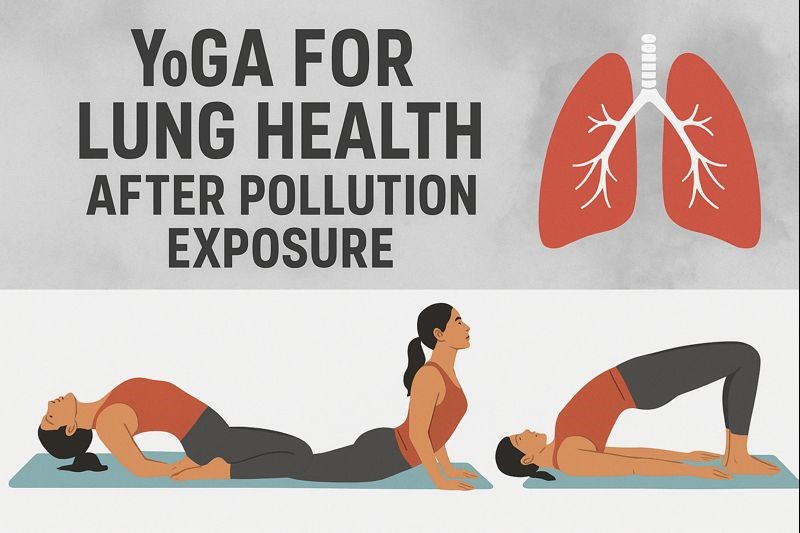
Fish Pose (Matsyasana)
Fish Pose is a wonderful chest-opener. It lengthens the anterior (front) portion of your neck, throat and the intercostals (muscles between your ribs). This expansion increases the capacity of your lungs to fill up.
How to do it:
- Lying on your back with you legs straight out and arms by your side, palms down.
- Sit down and slide your hands under your hips.
- Press into your forearms and elbows to lift your chest up towards the ceiling, arching your upper back.
- Let your head softly tip back, and lay onto the floor just with the crown of your head. Don’t bear weight down on your head.
- Inhale deeply into your wide open chest for 30 seconds.
Cobra Pose (Bhujangasana)
Cobra Pose is yet another strong heart-opening pose that extends the chest and abdominal muscles. It contributes to the flexibility in the spine as well as proper flow of blood throughout the torso.
How to do it:
- Lay on the ground (belly down), with hands under shoulders.
- Legs stay together and tops of feet press into the mat.
- Take a breath and lift your head, chest and upper abdomen off the floor with the help of your back muscles.
- Hips should stay on the ground and shoulders relaxed away from ears.
- Breathe easily as you hold this position for 15-30 seconds.
Bridge Pose (Setu Bandhasana)
This position allows the hips and chest to rise above the heart, potentially increasing blood flow to the lungs. It gives a gentle stretch to the chest, neck and spine.
How to do it:
- Lay on your back with your knees bent and feet flat on the floor, hip-distance apart.
- Rest your arms against your side with palms down.
- Push through the soles of your feet and your arms to raise your hips off the ground.
- Then, roll your shoulders in the same way and clasp your hands together if that feels okay.
- Maintain your parallel thighs and breathe into the chest increasing 30-60 seconds.
Pranayama: Breathing to Cleanse Your Lungs
Yoga for Lung Health – Pranayama The ancient Indian philosophy and practice of breath-control – aka Pranayama, is the bedrock of yoga asanas for lung health. These tactics can assist in clearing mucus, encouraging oxygen absorption and soothing the mind.
Skull Shining Breath (Kapalabhati)
This is cleansing force to be reckoned with. It is characterized by forceful, rapid exhalation and passive inhalation. Kapalabhati can help to remove mucus and allergens from the sinuses and respiratory passages.
How to practice:
- Take your seat in a comfortable position and spine straight.
- Take a deep breath in.
- Start exhaling in rapid, sharp bursts through your nose and try to push down hard as if you re flexing your ab muscles. The intake of breath should be an unconscious reflex.
- Begin with a set of 20-30 exhalations.
- breathe in as much as you can after the round then hold for as long as possible and release with a slow exhalation.
- Repeat for 2-3 rounds. Start slowly if you are a beginner to prevent getting lightheaded.
Bellows Breath (Bhastrika)
Like in Kapalabhati, pressureful breathing is also used in Bhastrika. It functions much like a bellow, forcefully sending the air rushing in and out in order to enliven the body and clear the airways.
How to practice:
- Sit in any comfortable pose keeping the spine straight.
- Deep breath in and then forceful expiration through your nose.
- Take a deep, sharp breath of equal length right after that.
- Maintain this vigorous rhythm of breath and count for 10 breaths.
- Then return to normal breathing following one round and observe the results.
- Begin with one round and progress to three.
Diaphragmatic Breathing (Belly Breathing)
This is the most basic way to breathe. Most people are shallow “chest breathers.” Diaphragmatic breathing trains you to breathe using your diaphragm, the main muscle you use when you breathe, which supports and encourages a better breath.
How to practice:
- Lay on your back with knees bent or sit if it’s more comfortable.
- One hand on your chest, the other hand on your belly.
- Take a slow breath in through your nose, letting your belly rise. You should feel your hand on your stomach rise, while the hand on your chest stays relatively still.
- Exhale slowly either through your mouth or your nose, letting your stomach deflate.
- Do this practice for 5-10 minutes daily and it will become your natural breath pattern.
Practical Tips for Consistency
To truly benefit from yoga for lung health, consistency is key. Here are some tips to help you build a lasting practice:
- Start Small: Dedicate just 10-15 minutes each day. You can do a few rounds of sun salutations followed by one or two poses and a pranayama exercise.
- Create a Routine: Practice at the same time each day, such as first thing in the morning, to help clear your lungs for the day ahead.
- Listen to Your Body: If you feel dizzy or strained, ease back. Yoga is about honoring your body’s limits, not pushing past them.
- Focus on the Breath: In every pose, bring your awareness back to your breath. This mindfulness is what makes yoga a moving meditation.
Breathe Better, Live Better
While we may not be able to control the quality of the air outside, we can take control of our internal environment. Yoga provides a practical and effective toolkit for strengthening our respiratory system and mitigating the harmful effects of pollution. If you’re seeking to deepen your skills or want to help others on their wellness journey, pursuing a Yoga Teacher Training in India can give you advanced knowledge on lung health, breathing techniques, and the holistic benefits of yoga. By integrating these poses and breathing techniques into your life, you empower yourself to build a healthier, more resilient body from the inside out. Start today, and give your lungs the care they deserve.